Buying Guides
Pre-Consumer vs. Post-Consumer Recycled Poly-Cotton Yarn: What’s the Real Difference?
Pre-Consumer vs. Post-Consumer Recycled Poly-Cotton Yarn: What’s the Real Difference?
Pre-Consumer vs. Post-Consumer Recycled Poly-Cotton Yarn: What’s the Real Difference?
When discussing recycled yarn, many assume this category contains only one standard type. In reality, there are two major classifications for recycled yarn: pre-consumer and post-consumer.
So what exactly sets these two yarn types apart?
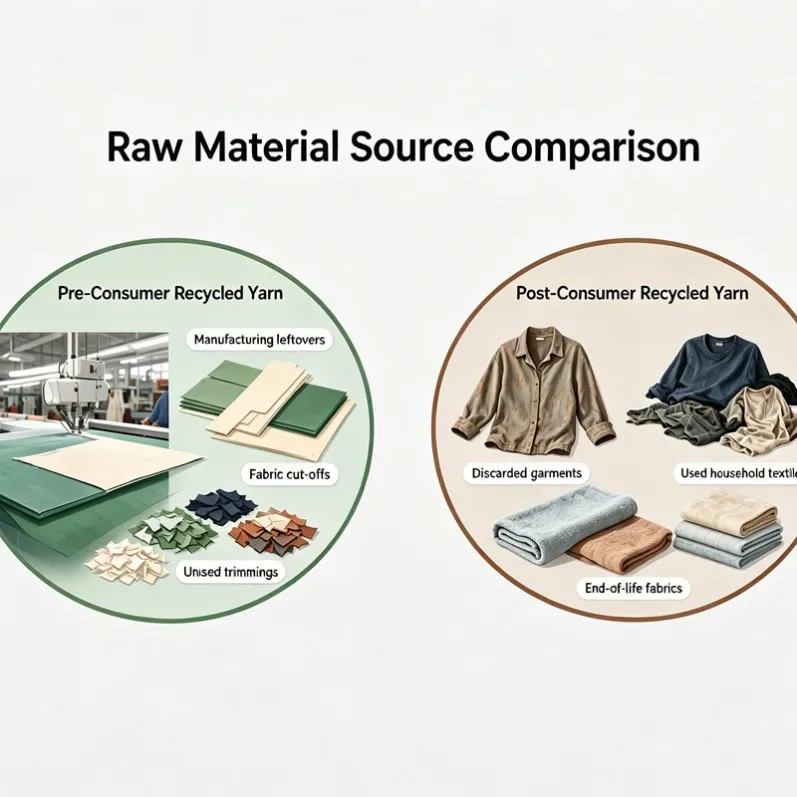
The first and most obvious distinction lies in their raw materials. Pre-consumer recycled yarn is made from manufacturing offcuts, also known as fabric scraps. These materials have never been used by end consumers — they are essentially unused trimmings generated during garment production.
By contrast, post-consumer recycled yarn is produced from materials that have already completed their service life: discarded clothing, pre-owned home textiles, and similar waste.
Why does this difference matter for the finished yarn? Pre-consumer waste tends to be cleaner and pre-sorted by color and fiber composition. This makes processing into recycled fiber simpler and more cost-effective. Post-consumer waste, however, comes mixed, soiled and inconsistent. It goes through extensive sorting, washing, and removal of non-fiber attachments such as buttons and zippers before spinning. This extra handling explains why post-consumer recycled yarn usually comes at a higher cost.
Mechanically recycled fibers, both pre-consumer and post-consumer, are shorter than virgin fibers. This is why recycled poly-cotton yarn frequently blends recycled cotton with polyester: polyester boosts tensile strength and improves yarn integrity throughout the spinning process.
Additionally, pre-consumer recycled yarn features far fewer foreign fiber contaminants compared to post-consumer alternatives. As a result, pre-consumer yarn delivers more consistent color and easier color management during production.
Ultimately, the selection comes down to you. Your decision will be guided by your target price range, quality specifications, and the sustainability positioning of your end products.