
Oct 27, 2026Material Notes
Where does the color of recycled yarn come from?
Where does the color of recycled yarn come from?
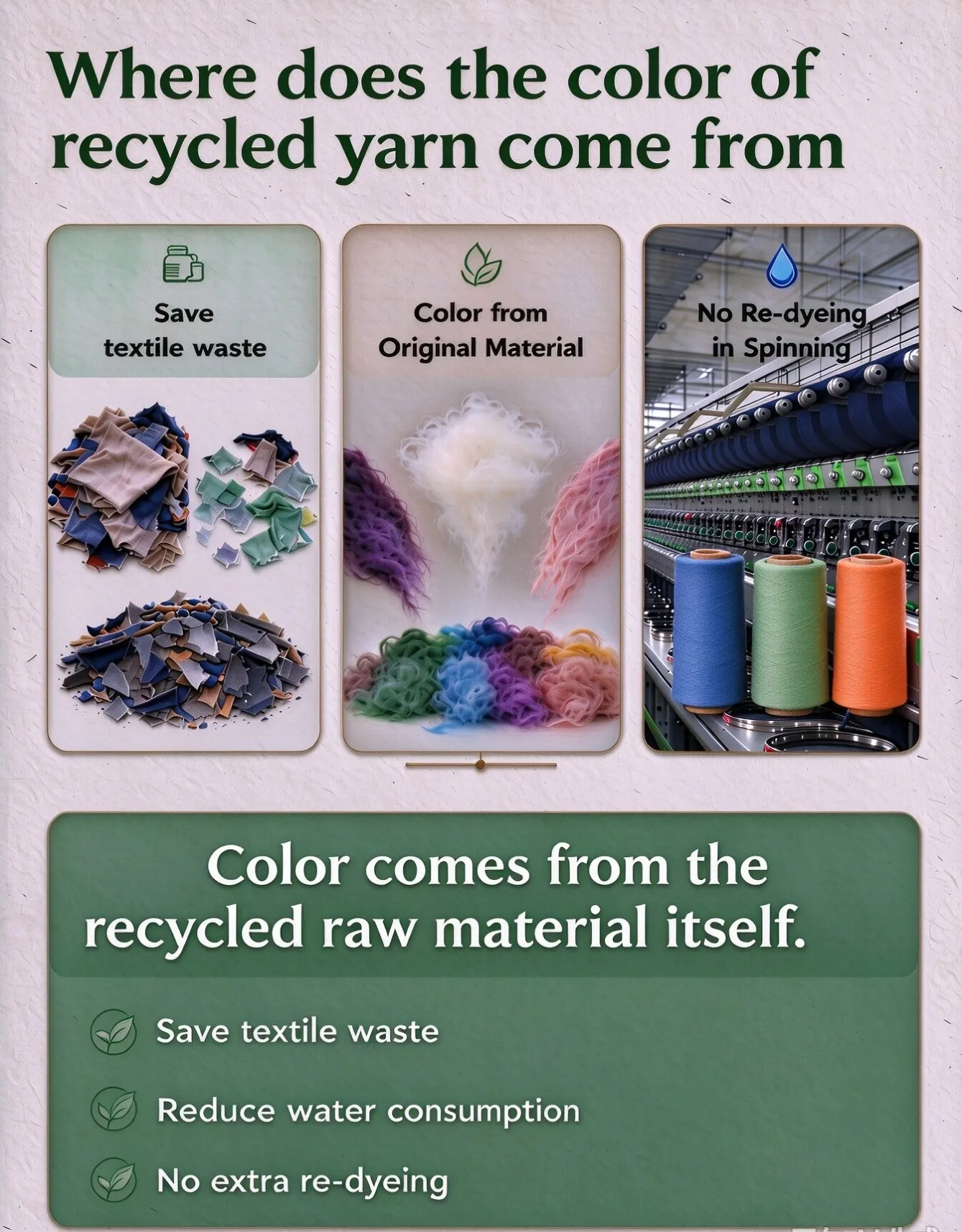
Where does the color of recycled yarn come from?
Textiles can be colored in a variety of methods, and each method carries unique benefits suited to specific applications and desired visual effects. Common textile coloring approaches you may be familiar with include:
- Dyeing
- Printing
- Dope-dyeing
This is also one of the most frequent questions our clients ask about recycled yarn. So where exactly does the color of our recycled yarn come from?
To answer this, we first need to distinguish the two main categories of recycled yarn: pre-consumer recycled material and post-consumer recycled material.
- Pre-consumer material: production waste generated during manufacturing, which has never reached end consumers.
- Post-consumer material: waste collected after being used and discarded by consumers, such as plastic bottles and old garments.
For both types, the incoming raw materials already have their inherent color. The yarn will not undergo re-dyeing during the spinning process.
In short, the color of our recycled yarn originates entirely from the pigment/color of the recycled raw material itself. No additional re-dyeing is applied after spinning. Compared with conventionally dyed yarn, this production route not only diverts textile scraps from landfills but also greatly cuts water consumption and reduces wastewater discharge.
You may wonder how we meet customers’ custom color requirements. Our R&D team carefully sorts and blends different colored recycled materials at precise ratios to replicate target shades. With this craftsmanship, garment factory scraps are given a new life and transformed into attractive, ready-to-use recycled yarn.